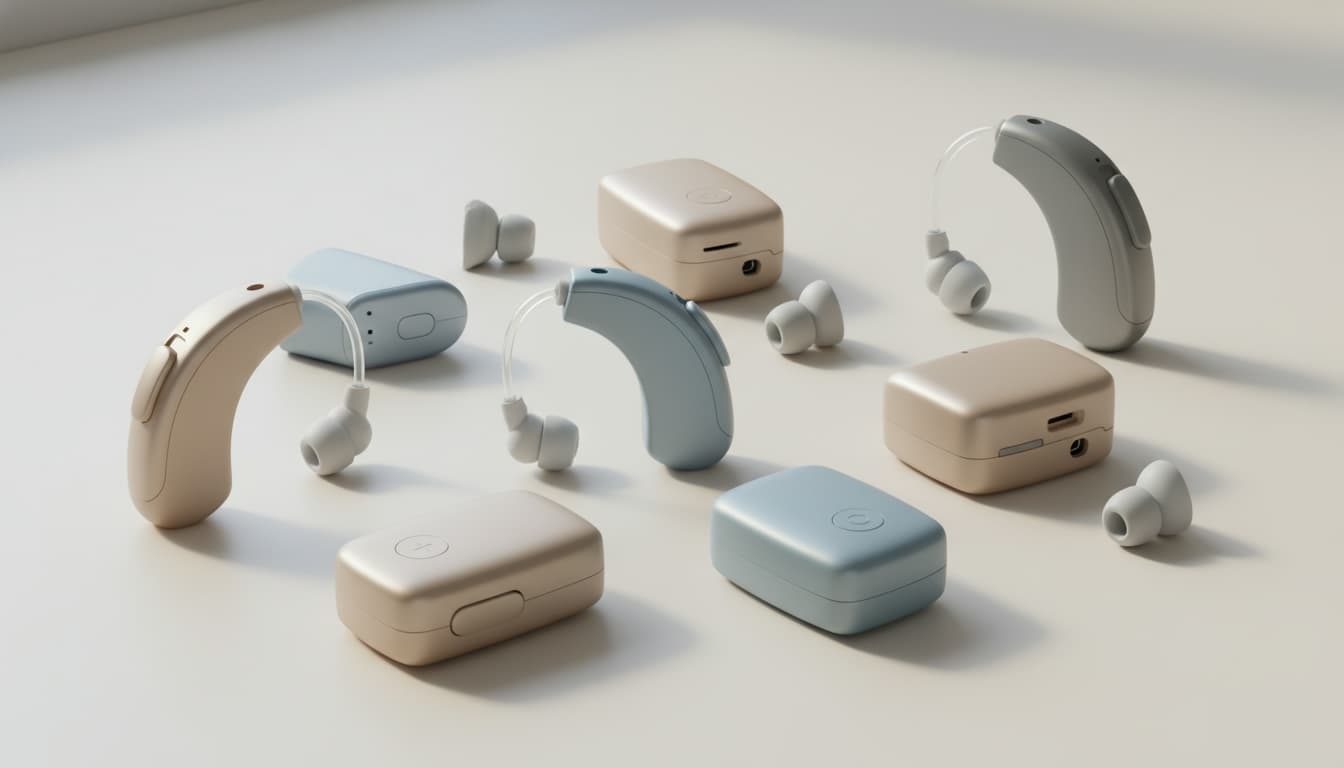

In brief, what you will discover in this article: how to choose the hearing aid best suited for a loved one by understanding types of hearing loss, different models, essential criteria, budget, and trial and maintenance steps. A clear guide for an informed choice.
1. Introduction: why ask the question "hearing aid: which to choose?"
Choosing an appropriate hearing aid is crucial to improve the quality of life of a loved one suffering from hearing loss. This choice is not just a simple purchase; it involves understanding specific needs, available options, and criteria that ensure comfort and effectiveness. This article guides you step by step so you don’t feel lost in the variety of devices and technologies.
2. Understanding your hearing loss
2.1 Types and degrees of hearing loss (mild, moderate, severe)
Hearing loss can be classified into several degrees:
- Mild: difficulty hearing soft sounds, especially in noisy environments.
- Moderate: need for amplification to understand normal conversations.
- Severe: great difficulty hearing, even with conventional amplification.
Each degree requires a different type of hearing aid for optimal effectiveness.
2.2 How hearing loss is diagnosed (audiogram, complementary tests)
The diagnosis is based on an audiogram, a test that measures the ability to hear different frequencies. Other examinations can complement this assessment to refine the choice of device. This diagnosis is the foundation of the hearing aid choice.
3. Types of hearing aids and their uses
3.1 Behind-the-ear (BTE): advantages, disadvantages, who is it for?
Behind-the-ear hearing aids (BTE) are sturdy and suited for moderate to severe hearing loss. They are easy to handle, ideal for seniors with some dexterity. Their size is more visible but they offer good power and long battery life.
3.2 In-the-ear (ITE/CIC): advantages, disadvantages, who is it for?
In-the-ear hearing aids are discreet, often custom-made, suited for mild to moderate hearing loss. Their compact design can pose handling challenges but they offer aesthetic comfort and good sound quality within a properly fitted canal.
3.3 Rechargeable hearing aids vs battery-powered
Rechargeable models are gaining popularity due to their convenience and battery life. Traditional batteries remain an economical option but require regular replacement. The choice depends on the user’s lifestyle and preferences.
3.4 Special solutions (micro-BTE, TV accessories, custom ear tips)
Some hearing aids offer options like micro-BTE, which is more discreet than BTE, or accessories for TV and communication. Custom ear tips improve comfort and sound quality.
4. Criteria for choosing: features and performance
4.1 Noise reduction and performance in noisy environments
The ability to reduce background noise is essential for comfortable listening. Modern technologies incorporate directional microphones and algorithms to enhance understanding in noisy settings.
4.2 Connectivity (Bluetooth, mobile app, smartphone compatibility)
Increasingly, hearing aids connect to smartphones via Bluetooth, allowing personalized adjustment through a mobile app. This connectivity eases adaptation and offers additional features.
4.3 Sound quality, signal processing, automatic adaptation
Sound quality depends on digital signal processing and the ability to automatically adjust to different sound environments, ensuring optimal comfort.
5. Budget, reimbursement, and cost comparison
5.1 Purchase price, hidden costs (fitting, follow-up), 3–5 year simulation
The price of a hearing aid varies according to technology and options, ranging from a few hundred to several thousand dollars. You should also consider fitting, follow-up, and maintenance costs over several years.
5.2 Social Security and insurance reimbursement (how to calculate your actual out-of-pocket expense)
Social Security reimburses part of the cost based on a fixed scale, often supplemented by insurance. It's important to accurately calculate the remaining charges to avoid surprises.
6. Trial, adaptation, and follow-up
6.1 What to test during the trial period? Practical checklist
During the trial period, you should check:
- Daily wearing comfort
- Sound quality in different environments
- Ease of use and adjustment
- Battery life (for rechargeable models)
- Discretion and aesthetics
6.2 Adjustments, auditory rehabilitation, and follow-up with the audiologist
Adaptation involves several personalized adjustments and regular follow-up with the audiologist. Auditory rehabilitation may also be necessary to optimize use.
7. Maintenance, warranty, and lifespan
7.1 Cleaning, ear tip replacements, battery changes
Regular maintenance is essential to ensure the hearing aid’s longevity. This includes cleaning, replacing ear tips, and changing batteries or recharging.
7.2 Warranty, after-sales service, and repairs
The warranty usually covers 2 to 5 years depending on the brand. After-sales service and repair availability are important criteria when choosing.
8. Alternatives and complementary solutions
8.1 Cochlear implants and technical aids
For severe hearing loss not compensated by conventional hearing aids, cochlear implants are a solution. Other technical aids may complement hearing devices.
8.2 Non-technological aids (communication strategies)
Simple strategies such as lip reading, positioning in quiet environments, or using visual signals improve daily communication.
9. Testimonials and case studies
User feedback shows that choosing a hearing aid must be personalized. For example, some prioritize discretion, others durability or connectivity. These testimonials help better understand real expectations.
10. Conclusion and practical recommendations
To choose a hearing aid wisely, you should:
- Understand the degree of hearing loss through a precise diagnosis.
- Identify the suitable type of hearing aid (BTE, in-the-ear, rechargeable).
- Evaluate technical criteria: noise reduction, connectivity, sound quality.
- Calculate budget including reimbursement and additional costs.
- Make the most of the trial period to test comfort and performance.
- Ensure regular follow-up and appropriate maintenance.
This guide helps you make an informed choice, avoiding the pitfalls of overly technical or commercial offers.
For more details, you can consult the complete guide on the best hearing aid brands which outlines the essential criteria for choosing according to your needs.
11. Call to action
Don’t wait to make an appointment with an audiologist for a personalized diagnosis. To support you, download our complete guide on choosing a hearing aid at skyda.co. You can also compare models and brands to find the device that perfectly matches your loved one.
To better understand new technologies that make daily life easier, also check out our article on what is an eSIM, an innovation revolutionizing mobile connectivity.