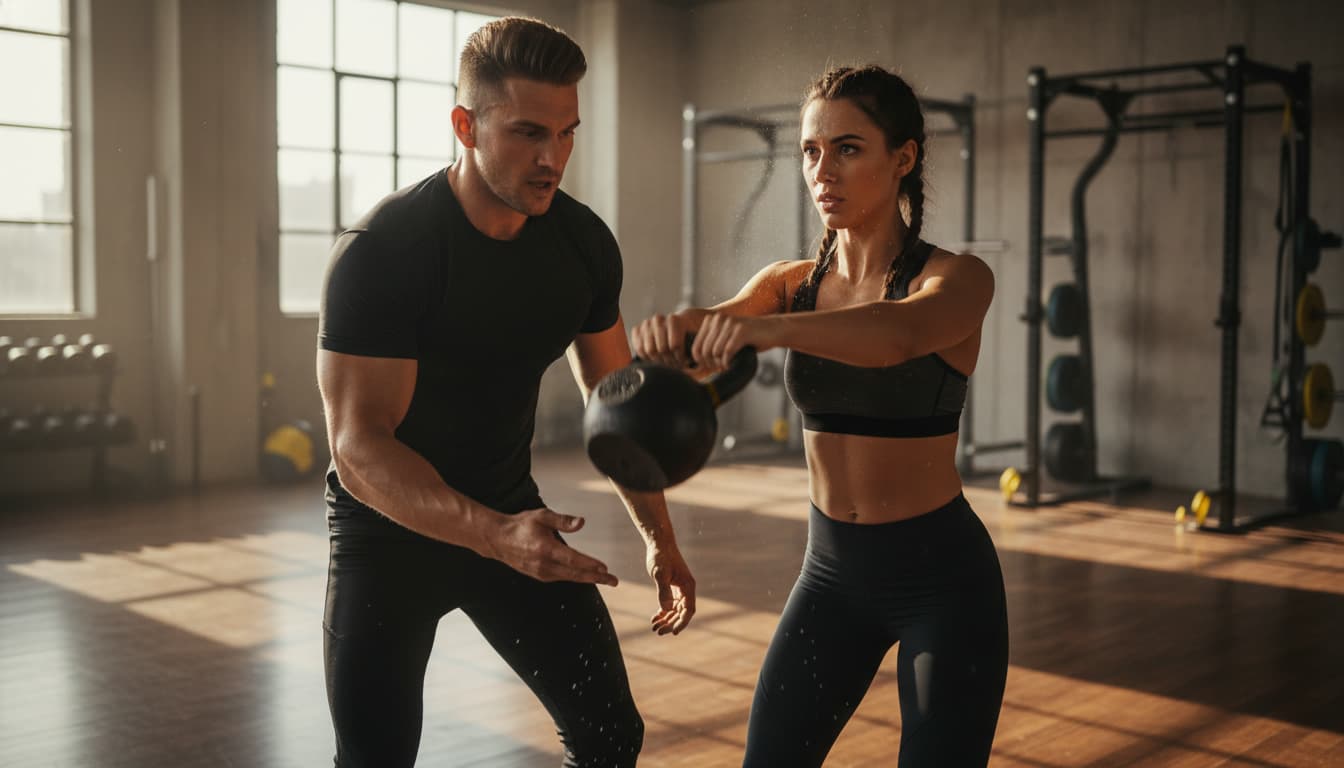

In short, what you will discover in this article: the precise translation of the term physical trainer in English, common variations, a comprehensive glossary to master professional vocabulary, tips for writing a resume in English, and practical examples to communicate effectively in this profession internationally.
1. Introduction — Why knowing the English vocabulary for physical trainers is essential
In a professional context, mastering the vocabulary of the physical trainer in English is crucial. Whether you are preparing a resume, applying for a position abroad, or communicating with English-speaking colleagues, using the right term avoids misunderstandings and enhances your profile. It also facilitates understanding of the specific skills and responsibilities of this profession.
For example, confusing a physical trainer with a strength and conditioning coach can change the perception of your expertise. To succeed, you need to know the nuances and technical terms suited to your field.
2. Translation of the title and roles — 'préparateur physique' in English and common variants
The most common term to translate préparateur physique in English is physical trainer. This translation is widely recognized in the sports and fitness environment.
2.1 'Strength and Conditioning Coach' vs other translations
-
Physical trainer generally refers to a professional who designs and supervises physical training programs, often in fitness or rehabilitation.
-
Strength and conditioning coach is a more specific term, mainly used in high-level sports. It refers to a physical trainer specialized in improving strength, power, and physical condition of athletes.
-
Other variants include fitness coach or personal trainer, but these terms are more general and may not reflect all the skills of a physical trainer.
For a reliable and contextual translation, the Cambridge Dictionary confirms that physical trainer is the main and most appropriate translation.
3. Essential glossary (FR → EN) for physical training
To communicate effectively, here is a glossary grouping key terms related to the profession.
3.1 Terms related to bodybuilding and performance (strength, power, hypertrophy, etc.)
- Force : strength
- Puissance : power
- Hypertrophie : hypertrophy
- Endurance musculaire : muscular endurance
- Explosivité : explosiveness
3.2 Terms related to functional training and methods (plyometrics, circuit training, HIIT)
- Plyométrie / pliométrie : plyometrics
- Circuit training : circuit training
- Entraînement fractionné de haute intensité : High-Intensity Interval Training (HIIT)
- Mobilité fonctionnelle : functional mobility
3.3 Vocabulary for measurements and tests (VO2 max, 1RM, lactate, etc.)
- VO2 max : VO2 max
- Charge maximale (1RM) : one-repetition maximum (1RM)
- Seuil lactique : lactate threshold
- Fréquence cardiaque : heart rate
4. How to write your resume / professional profile in English (examples and key phrases)
To showcase your profile, use clear and professional phrases.
4.1 Model sentences to describe experience and responsibilities
- Designed and implemented personalized training programs to improve athletes’ strength and endurance.
- Monitored clients’ progress and adjusted workouts to optimize performance.
- Collaborated with medical staff to ensure safe rehabilitation protocols.
4.2 Translation of certifications and diplomas — how to present them
Mention your diplomas in English, for example:
- Bachelor’s degree in Sports Science (Licence en sciences du sport)
- Certified Strength and Conditioning Specialist (CSCS) (Recognized certification in physical training)
For more precision, you can consult examples on Oxford Learner's Dictionaries.
5. Practical examples — translating a training program
5.1 Example session translated line by line (sets, reps, tempo, rest)
| French | English |
|---|---|
| 3 séries de 10 répétitions | 3 sets of 10 reps |
| Tempo 2-0-1 | Tempo 2-0-1 |
| Repos 60 secondes | Rest 60 seconds |
| Échauffement | Warm-up |
5.2 Common abbreviations and their meaning
- RM : repetition maximum
- AMRAP : as many reps as possible
- RPE : rate of perceived exertion
6. Coach ↔ athlete communication in English
6.1 Frequent scripts and instructions (warm-up, corrections, feedback)
- "Let’s start with a warm-up to prepare your muscles."
- "Keep your back straight during the lift."
- "Focus on controlled breathing throughout the exercise."
- "Great job! Let’s increase the intensity next set."
These phrases facilitate clear and motivating coaching.
7. Preparing an interview or application in English
7.1 Typical questions and recommended answers
-
Why did you choose to become a physical trainer?
"I am passionate about helping athletes improve their performance and prevent injuries through tailored training programs." -
How do you assess a new client’s fitness level?
"I conduct initial evaluations including strength, endurance, and mobility tests to design personalized plans."
8. Additional resources
8.1 Podcasts, videos, audio glossaries for pronunciation
To improve your pronunciation and enrich your vocabulary, explore specialized audio and video resources. For example, English fitness podcasts or YouTube channels dedicated to sports coaching.
8.2 Email templates and downloadable forms
To facilitate your professional exchanges, you can find email templates adapted for applications or client follow-ups. These tools help you stay professional and clear.
To deepen your knowledge of professional English, feel free to consult our complete guide on the profession of physical trainer in English, which will provide enriched context and practical advice.
9. Conclusion — practical checklist to remember
- Use physical trainer for a general translation and strength and conditioning coach for a specialized role.
- Master the technical vocabulary related to bodybuilding, training, and testing.
- Write your resume with clear phrases and precise translations of your diplomas.
- Prepare to communicate effectively with model phrases for coaching and interviews.
To succeed in your application or professional exchange, apply these tips and enrich your vocabulary with reliable resources like the Cambridge Dictionary.
Do you also want to stay connected during your business trips? Discover how to easily install an eSIM with our complete guide on how to install an eSIM.
Take action now and master the vocabulary of the physical trainer in English to boost your international career!